
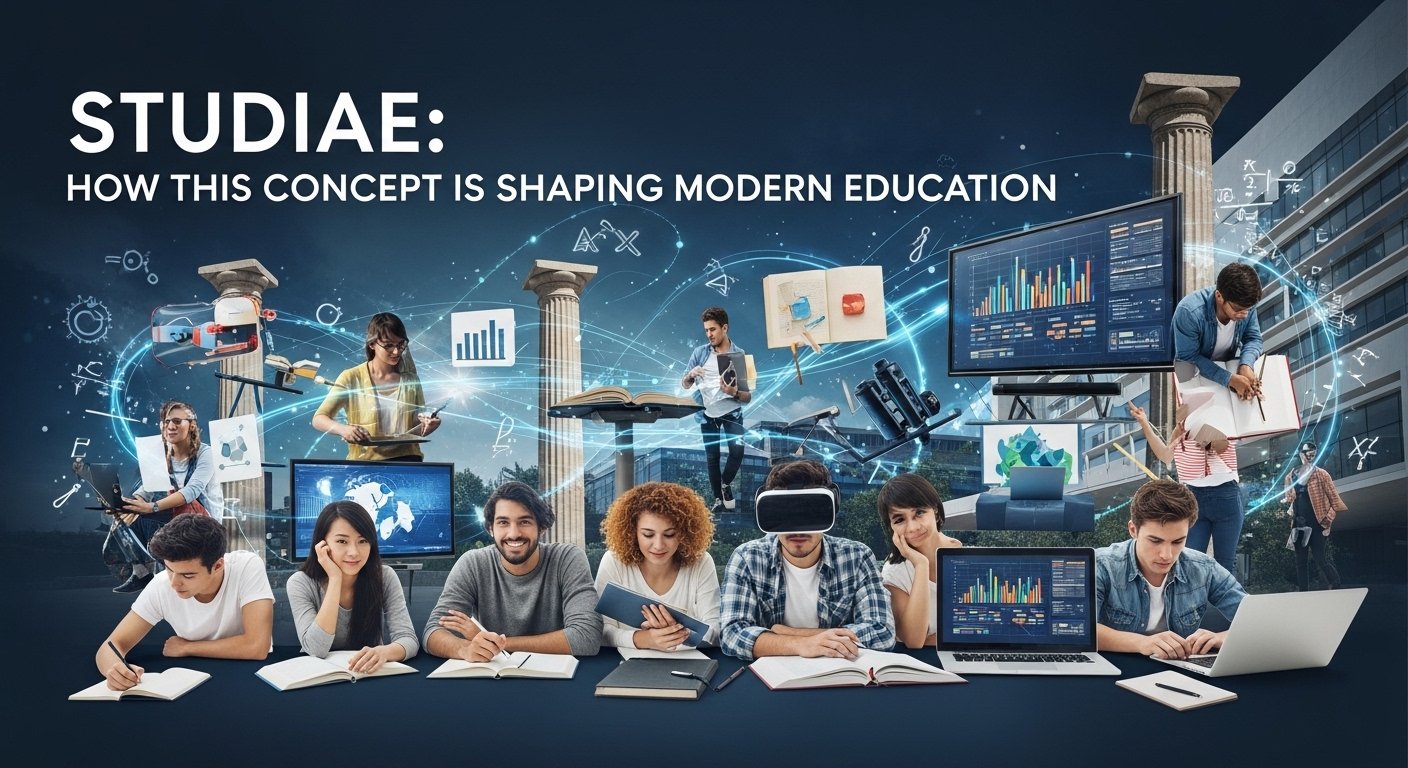
Education is evolving, and at the forefront of this transformation is a concept known as Studiae. But what exactly does it mean? In an era where traditional teaching methods are increasingly being challenged, Studiae offers a fresh perspective on learning. It emphasizes curiosity, engagement, and critical thinking—elements that modern students desperately need to thrive in a complex world.
Imagine classrooms buzzing with energy, where students dive deep into subjects they’re passionate about rather than just memorizing facts for tests. That’s the essence of Studiae. This approach reshapes how we view education today, moving away from rote learning towards fostering creativity and independence among learners.
Curious about how this innovative idea took root? Or perhaps you want to know its impact on modern education systems? Let’s explore the origins of Studiae and see how it’s making waves in schools around the globe.
The Origins of Studiae
Studiae has roots that stretch back to ancient philosophical thought. The term, derived from Latin, embodies the essence of study and learning.
Historically, scholars emphasized the importance of inquiry and critical thinking as pathways to knowledge. This foundational belief inspired educators through the ages. They sought not just to impart information but to cultivate a deeper understanding among students.
As education evolved over centuries, so did the principles behind studiae. From medieval universities promoting intellectual rigor to Enlightenment thinkers advocating for reasoned discourse, each era contributed layers of meaning.
Today’s iteration reflects a blend of these historical influences while addressing contemporary educational needs. It captures the spirit of curiosity and engagement essential for modern learners navigating an ever-changing world.
The Impact of Studiae on Modern Education
Studiae is redefining the landscape of modern education. It emphasizes personalized learning, allowing students to engage with material in ways that resonate with their individual interests and strengths.
This approach fosters deeper understanding. Instead of rote memorization, learners explore concepts more organically. They develop critical thinking skills essential for today’s world.
Teachers are also affected by this shift. The traditional role transforms from information provider to facilitator. This change encourages collaboration between educators and students, creating a dynamic classroom environment.
Moreover, Studiae promotes inclusivity. Diverse learning styles find support within this framework, ensuring every student has an opportunity to thrive.
As technology integrates further into education, the impact of Studiae grows stronger. Online platforms can tailor experiences even more precisely—encouraging innovation and adaptability in teaching methods across various subjects and age groups.
Benefits of Implementing Studiae in Schools
Implementing Studiae in schools opens up new avenues for personalized learning. Each student has unique strengths and weaknesses, and this approach tailors educational experiences to meet individual needs.
Engagement levels soar when students take ownership of their learning. They become active participants rather than passive recipients of information. This fosters a deeper connection to the material.
Collaboration is another significant benefit. Students work together on projects, honing essential teamwork skills that are crucial in today’s workforce.
Additionally, Studiae encourages critical thinking and creativity. Rather than rote memorization, learners explore concepts in-depth, leading to a more comprehensive understanding.
Moreover, integrating technology into this framework enhances accessibility for all learners. It bridges gaps that traditional methods may overlook.
With these advantages combined, Studiae positions itself as a transformative force in modern education systems across various settings.
Criticisms and Challenges of Studiae
While Studiae presents many benefits, it is not without its criticisms. Some educators argue that the model can be too abstract. This may lead to confusion among students who thrive on traditional structures.
Another challenge lies in the implementation. Not all schools have the resources or training necessary to adopt this approach effectively. Teachers may feel overwhelmed by integrating new methodologies into their existing curricula.
Moreover, there are concerns regarding standardization. Critics worry that focusing on a personalized learning experience could compromise uniform assessments and benchmarks essential for academic evaluation.
Resistance from parents and administrators also poses hurdles. Many stakeholders prefer familiar educational practices over untested concepts like Studiae, fearing potential risks associated with change.
Measuring success within the framework of Studiae remains complex. Traditional metrics may not capture the deeper learning experiences intended by this innovative model.
Case Studies: Successful Implementation of Studiae in Schools
One inspiring example of Studiae in action is found at Lincoln High School. Here, educators integrated interdisciplinary learning, allowing students to explore real-world problems through various subjects. By connecting math, science, and literature with a community garden project, students developed critical thinking skills while enhancing their understanding of sustainability.
Another notable case comes from Crestwood Academy. They adopted the Studiae framework by promoting student-led initiatives. Students identified issues within their school and worked collaboratively on solutions. This hands-on approach not only increased engagement but also fostered a sense of ownership among learners.
In a more urban setting, Eastside Middle School utilized technology to implement Studiae principles effectively. Through virtual classrooms and online collaborative tools, teachers provided personalized learning experiences that catered to each student’s needs while emphasizing teamwork.
These successful implementations showcase how adaptable and impactful Studiae can be across diverse educational environments.
Future Possibilities for Studiae in Education
The future of Studiae in education is ripe with potential. As technology continues to advance, personalized learning experiences could become more prevalent. Imagine a classroom where each student engages with customized content tailored to their interests and strengths.
Virtual reality may play a role too, offering immersive environments that enhance understanding and retention. Students could explore historical events or scientific phenomena firsthand, fostering deeper connections to the material.
Collaborative platforms are also on the horizon. They can unite learners from different backgrounds, promoting cultural exchange and diverse perspectives through shared projects.
Moreover, integrating mindfulness practices into the Studiae framework might help students develop emotional resilience. This holistic approach can prepare them for real-world challenges beyond academics.
As educators embrace these innovative methods, they will empower students not only to learn but also to thrive in an ever-evolving world filled with possibilities.
Conclusion
The emergence of Studiae as a concept is transforming the landscape of modern education. Its emphasis on personalized, student-centered learning invites educators to rethink traditional methods and adapt to the diverse needs of their students. By focusing on collaboration, inquiry-based approaches, and real-world applications, Studiae cultivates critical thinking skills vital for success in today’s world.
While there are challenges and criticisms associated with implementing this approach—such as resistance from traditionalists or logistical hurdles—the benefits it offers cannot be ignored. Schools that have embraced Studiae report increased engagement among students and improved academic outcomes.
As we look towards the future, the possibilities for integrating Studiae into educational systems seem promising. With advancements in technology and an increasing recognition of varied learning styles, more schools may adopt this innovative approach. The journey towards a more inclusive and effective education system is underway, driven by concepts like Studiae that prioritize holistic development over rote memorization.
Embracing these changes will not only enrich the educational experience but also prepare students to thrive in an ever-evolving global landscape.







Leave a Reply